AI-Native Design Workflow : Edition 05Molecule Assembly & Strategic Recalibration
Written: May 04, 2026
Summary:
This edition built the molecule layer of the design system. Seven molecules now exist in Figma as real components, composed from atom instances with token binding. Generating them revealed how far Figma had drifted from the live product. Six visual issues were found and fixed. The edition ended with a strategic decision: stop chasing pixel-perfect Figma sync automatically, and shift focus to what actually enables consistent design expansion.
The Goal: Generate all seven molecules in Figma using Molecule Assembler (plugin-03b), so the design system reflects the full component inventory of the live product.
The Challenge: After more than a month of work, only two product pages existed. The return on investment needed an honest review.
Deep Dive
1: Molecule assembly
Molecule Assembler (plugin-03b) builds each molecule from real atom instances, not copies, using a JSON config as the blueprint. Token changes in atoms propagate into molecules automatically. The atom index is maintained by Molecule Locator (plugin-03a).
Seven molecules generated: ChecklistItem, ChartLegendItem, NavItem, BulkActionBar, SelectDropdown, FilterBar, HeaderActionGroup.
During HeaderActionGroup assembly, a deeper problem was found: the plugin had been building a fake search field: a custom frame that just looked like a SearchField but had no connection to the real atom. Same for the date button, which was a styled Button pretending to be a dropdown. Both were replaced with their proper component counterparts.
2: Visual fixes, and why they matter
Once the molecules were generated, they were compared against the live product one by one. Almost every molecule had something wrong. ChecklistItem, NavItem, BulkActionBar, SelectDropdown, FilterBar, HeaderActionGroup: each needed manual correction. Some issues were small (wrong text size, wrong placeholder color), some required a full redesign (the SelectDropdown trigger had no leading icon at all and had to be rebuilt from scratch). Icons were placed outside fields in some components and inside in others. The SearchField background was fully opaque when it should be semi-transparent. The dropdown checkmark was always muted gray regardless of state. A white border appeared around menus because of a wrong border token.
The list kept growing. Each fix required identifying the gap, updating the plugin logic or config, regenerating the component, and checking again. There was no shortcut.
This is what made the scale of the problem clear. It was not a matter of fixing a few bugs. It was a structural issue. Every time the live product changes, Figma falls behind. And catching up always means the same slow, manual loop.
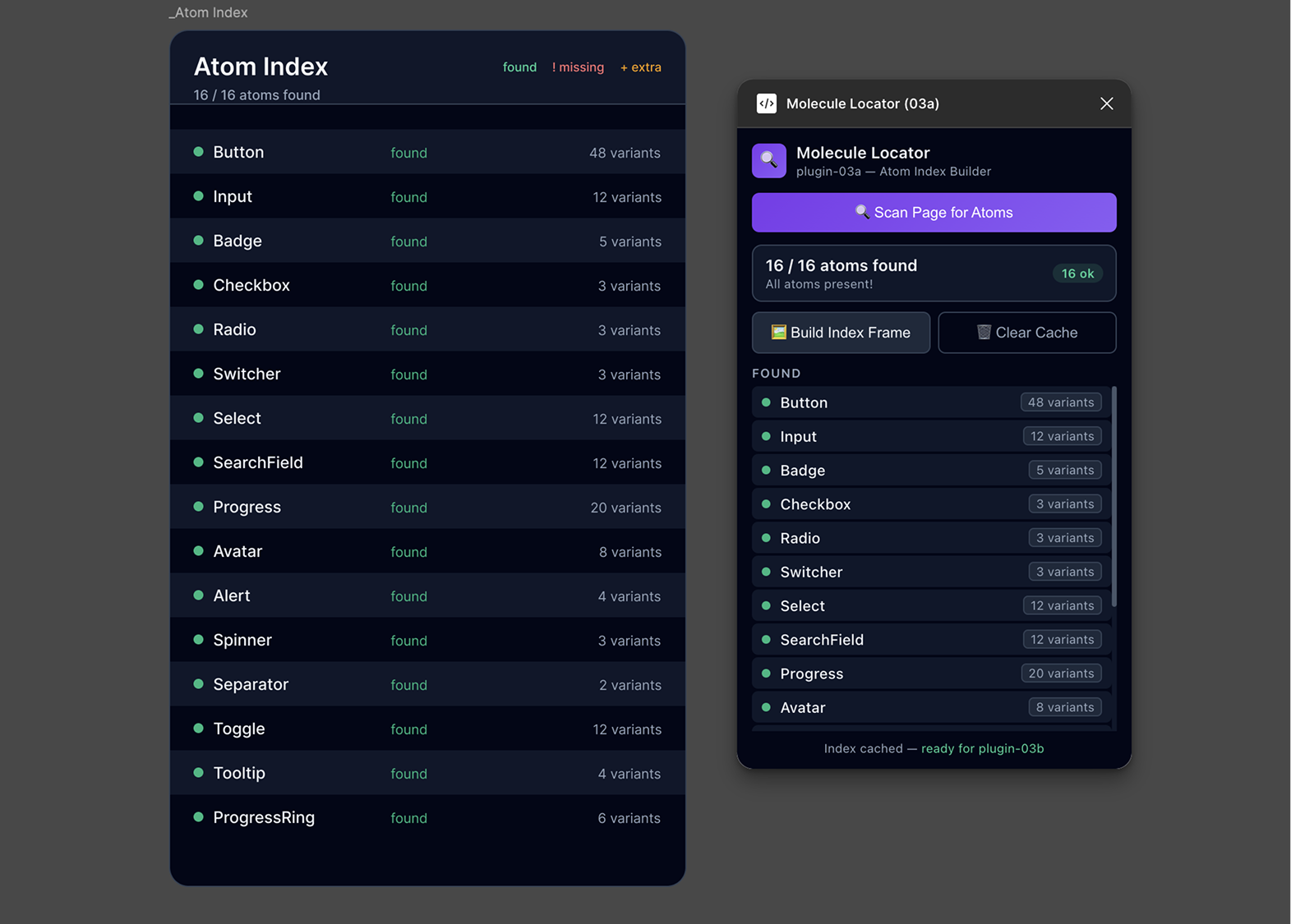
Moledules Locator (plugin-03a)
3: Instance Swap on icon slots
All components with icon slots now expose an Instance Swap property in Figma's Properties panel. Designers can swap icons directly from the panel without entering the component.
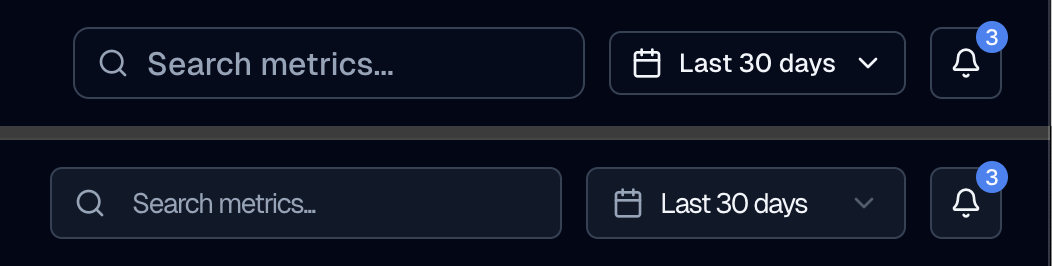
Refactoring Header Action Group: From custom frame(top) to atom instance(bottom).
4: Select atom removed
No current component uses the form-style Select atom. Removed to keep the atom set clean. Atom count: 17 to 16.
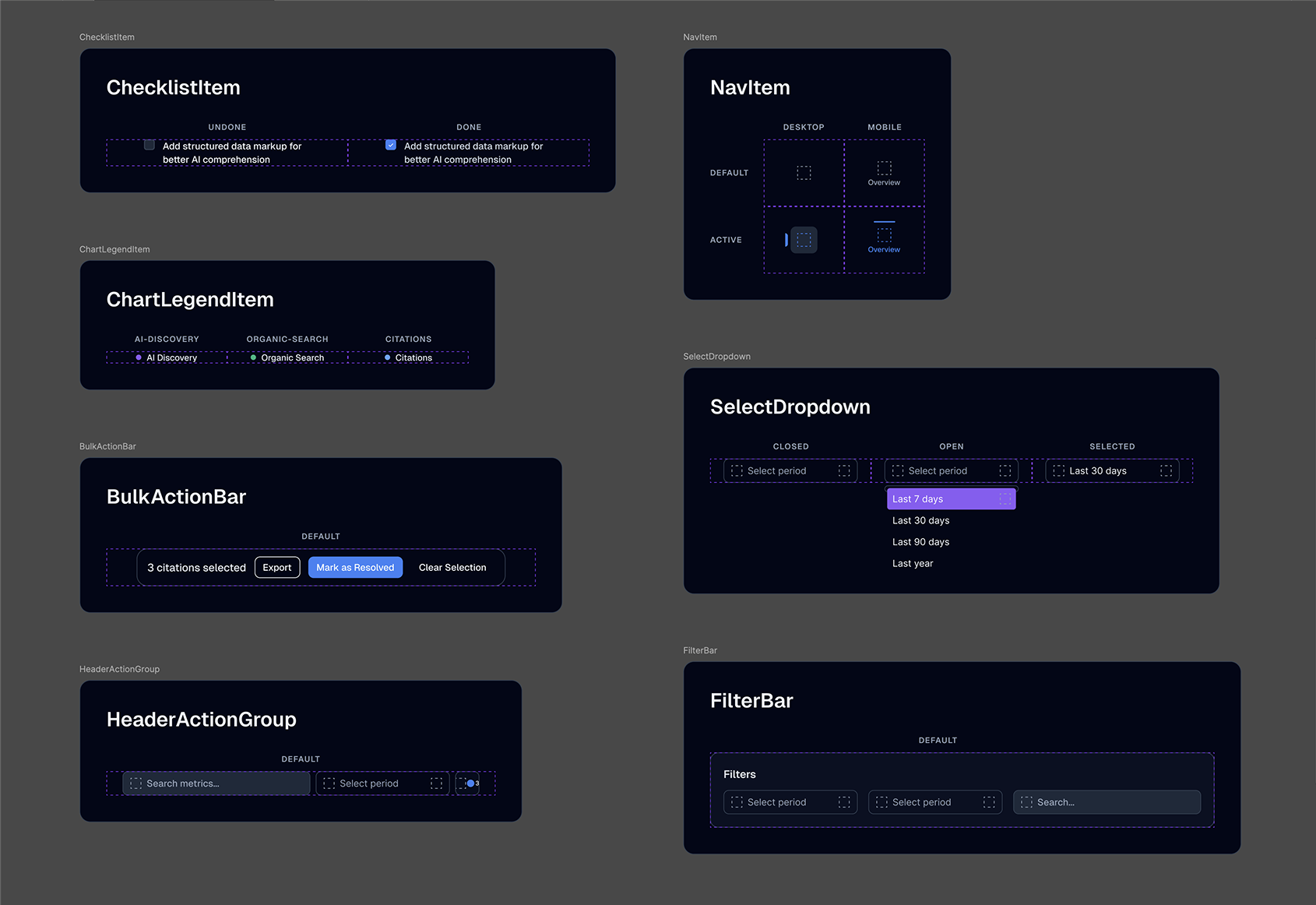
7 core molecules generated via the Molecule Assembler.
5: Strategic recalibration
Figma components are static. The live product uses dynamic CSS and runtime behavior. Every product change can open a new visual gap, and closing it always requires another investigation and plugin update cycle.
The plan for design expansion is Lovable, an AI tool that generates new pages from prompts using the codebase as context, not Figma. The missing piece is DESIGN_SYSTEM.md: a document describing available components, their usage, and design token conventions. That is what makes Lovable output consistent. Figma stays useful as a layout planning tool, but automated sync is no longer the priority.
Critical Reflection & Conclusion
The assumption that code and Figma can stay in sync automatically was wrong. The gap is structural, not fixable. The work in Editions 01 to 05 produced a real, usable component library. But the most valuable next investment is documentation, not more plugins.
Achieved: 7 molecules in Figma, 6 visual issues fixed, Instance Swap on all icon components, Select atom removed, design expansion strategy confirmed.
Edition 06: Write DESIGN_SYSTEM.md. Test with a first Lovable-generated page. Plugin development is paused.